
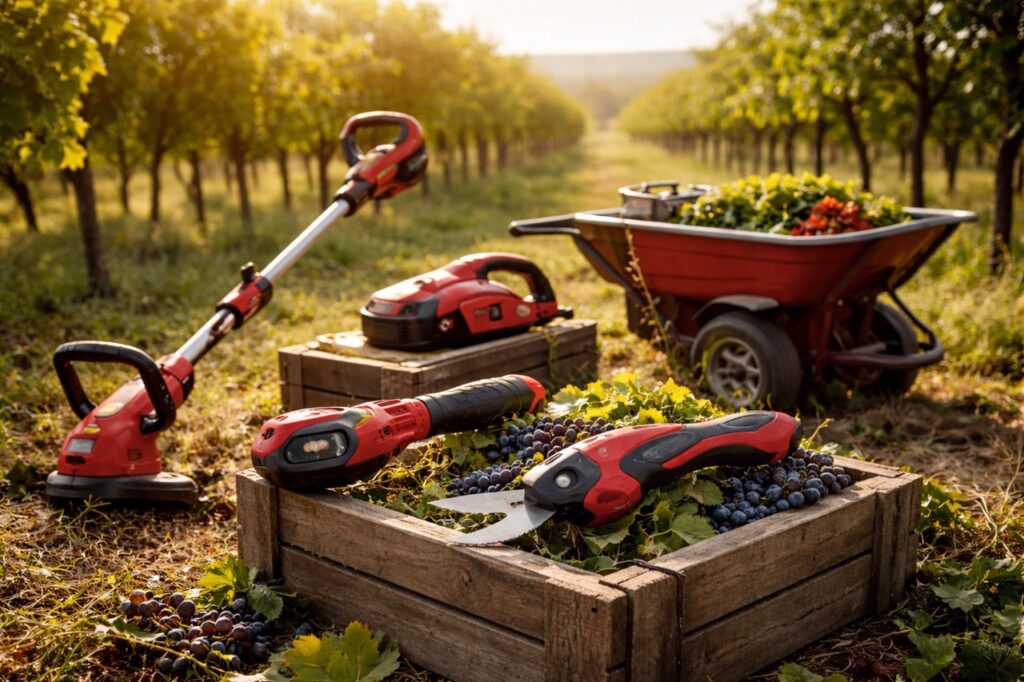
Advantages of switching to electric agricultural tools
Across farms of every size, a quiet transformation is underway. Diesel engines that once dominated fields are gradually giving way to batteries, brushless motors, and smart control systems. The advantages of switching to electric agricultural tools are no longer theoretical; they are visible in vineyards, orchards, greenhouses, and livestock facilities around the world. From reduced operating costs to improved working conditions, this shift is redefining how modern agriculture operates. The advantages of switching to electric agricultural tools extend beyond environmental messaging. They touch productivity, maintenance, long-term investment strategy, and even the image of farming businesses.
Lower operating costs and long-term savings
When farmers evaluate new equipment, cost remains a decisive factor. At first glance, electric machinery can appear more expensive to purchase. However, a closer analysis reveals that the total cost of ownership often tells a different story.
Electric motors contain fewer moving parts than internal combustion engines. Without oil filters, fuel injectors, or complex exhaust systems, maintenance demands drop significantly. This mechanical simplicity translates into fewer breakdowns, less downtime, and reduced service bills over the lifespan of the equipment.
Energy costs further reinforce the financial argument. Electricity, particularly when sourced from on-site solar installations, tends to be more predictable and often cheaper than diesel or gasoline. Over time, these savings accumulate steadily. For operations that rely on daily pruning, mowing, or feeding tasks, the advantages of switching to electric agricultural tools become measurable in annual budget reviews.
Improved working conditions and operator comfort
Beyond economics, the human factor plays a crucial role. Farming remains physically demanding, and tools that reduce fatigue can dramatically improve productivity and safety.
Electric agricultural tools operate with noticeably lower noise levels. The absence of a roaring engine creates a calmer working environment. In confined spaces such as barns or greenhouses, this difference is striking. Workers can communicate more easily, reducing misunderstandings and enhancing coordination.
Vibration levels are typically lower as well. Over long working days, reduced vibration means less strain on hands, wrists, and arms. For tasks like pruning, trimming, or cutting, this ergonomic advantage can prevent repetitive strain injuries. The advantages of switching to electric agricultural tools are particularly evident in labor-intensive sectors like viticulture and arboriculture.
Air quality is another critical element. Fuel-powered engines emit exhaust gases that can accumulate in enclosed spaces. Electric equipment eliminates on-site emissions entirely. In livestock facilities or indoor growing operations, cleaner air directly contributes to animal health and worker well-being.
This transformation reshapes daily routines. Instead of managing fuel storage, checking oil levels, and dealing with fumes, operators focus on the task itself. The result is a more efficient and comfortable work environment.
Environmental performance and sustainability goals
Sustainability has become central to agricultural policy and consumer expectations. Producers face increasing pressure to reduce carbon footprints and demonstrate responsible practices.
Electric tools contribute directly to these objectives. While electricity production may involve emissions depending on the energy mix, on-site use remains emission-free. When powered by renewable sources such as solar panels or wind turbines, electric agricultural tools support near-zero operational emissions.
The advantages of switching to electric agricultural tools therefore align with broader climate strategies. Farms integrating renewable energy can create a circular model: solar panels charge batteries during the day, which then power machinery in the field.
Noise reduction benefits neighboring communities, particularly in peri-urban farming areas. Lower sound pollution fosters better relationships with residents and helps avoid regulatory conflicts.
Key environmental benefits include:
- Zero direct exhaust emissions
- Reduced noise pollution
- Compatibility with renewable energy systems
- Lower risk of soil contamination from fuel spills
- Decreased dependence on fossil fuels
These elements combine to strengthen a farm’s environmental credentials. In markets where traceability and sustainability influence purchasing decisions, such improvements can enhance brand value.
Technological innovation and precision farming
Modern electric agricultural tools often integrate advanced electronics, sensors, and connectivity features. This is not a coincidence. Electrification naturally complements digitalization.
Precision control becomes easier with electric motors. Speed adjustments are instantaneous and finely calibrated. In pruning or harvesting tools, this precision reduces plant damage and improves output quality. In irrigation systems or feed distribution equipment, electronic controls ensure accurate dosing.
Data collection represents another advantage. Many electric systems can track usage hours, battery health, and performance metrics. These insights support predictive maintenance, preventing unexpected failures. Farmers gain a clearer understanding of operational patterns and can optimize workflows accordingly.
The advantages of switching to electric agricultural tools thus extend into the digital sphere. As agriculture evolves toward data-driven decision-making, electric platforms provide a flexible base for innovation.
In addition, autonomous or semi-autonomous machinery frequently relies on electric propulsion. Robotic weeders, small electric tractors, and automated feeding systems illustrate how electrification and automation move forward together. Efficiency and intelligence become intertwined in daily operations.
Versatility across agricultural sectors
Electrification is not limited to one niche. Its adoption spans multiple agricultural domains.
In vineyards, electric pruning shears reduce strain and increase precision. Orchard managers benefit from quieter sprayers and mowers. Livestock operations adopt electric feeders and manure handling systems to streamline routines. Greenhouse producers rely on electric carts and climate control devices to maintain optimal conditions.
The advantages of switching to electric agricultural tools vary depending on the context, but the underlying themes remain consistent: lower emissions, quieter operation, simplified maintenance, and enhanced control.
Small-scale farms often appreciate the portability of battery-powered devices. Without the need for fuel storage or large engines, equipment becomes easier to transport and deploy. Large-scale operations, on the other hand, focus on energy integration strategies, such as combining electric tractors with renewable infrastructure.
This adaptability explains why electrification is accelerating globally. Rather than replacing every machine overnight, farmers typically begin with handheld tools or smaller equipment. Gradually, confidence grows, and larger investments follow.
Energy independence and resilience
Energy volatility has become a serious concern in recent years. Fuel price fluctuations can disrupt financial planning and erode margins. Electric solutions offer an alternative path.
By installing photovoltaic panels or participating in local energy cooperatives, farms can reduce reliance on external fuel suppliers. Batteries store excess energy for later use, creating a buffer against grid instability.
The advantages of switching to electric agricultural tools include this enhanced resilience. During periods of supply chain disruption, access to locally generated electricity provides a strategic safeguard. While complete independence may not always be feasible, partial autonomy strengthens operational stability.
Moreover, electrification supports diversified energy management. Charging can be scheduled during off-peak hours, optimizing costs. Smart systems balance loads and prevent overloads. This level of control is difficult to achieve with traditional fuel-based machinery.
Challenges to consider before transitioning
No transformation occurs without obstacles. Despite the numerous advantages of switching to electric agricultural tools, certain constraints must be acknowledged.
Initial investment costs can be higher. Battery capacity and lifespan remain central considerations, particularly for heavy-duty equipment. Charging infrastructure requires planning, and remote areas may face grid limitations.
Range anxiety is another concern. For large fields requiring continuous operation, battery endurance must match workload demands. However, technological progress continues rapidly. Improvements in battery density and charging speed are narrowing these gaps year after year.
Careful assessment of operational needs is therefore essential. Instead of a complete and immediate replacement, many farms adopt a phased approach. This strategy allows them to evaluate performance and adapt gradually.
A new era for agricultural equipment
Taken together, the advantages of switching to electric agricultural tools reveal a broader evolution in farming practices. The change is not solely about replacing engines; it represents a shift in mindset. Efficiency, sustainability, worker welfare, and digital integration converge in this new model.
Fields once defined by the rumble of combustion engines are becoming quieter. Barns feel cleaner. Maintenance workshops handle fewer oil changes and more software updates. Farmers monitor battery charge levels alongside soil moisture data.
This transformation illustrates how agriculture adapts to contemporary challenges. Economic pressure, environmental responsibility, and technological innovation are shaping equipment choices. As battery technology advances and infrastructure expands, the advantages of switching to electric agricultural tools will likely become even more pronounced.
For producers willing to evaluate long-term strategy rather than short-term habits, electrification offers a compelling pathway. It is a transition grounded in practicality, reinforced by sustainability, and driven by measurable performance gains.
In the years ahead, electric agricultural tools may well become the standard rather than the exception. Those who embrace the shift today position themselves at the forefront of a rapidly evolving agricultural landscape.